
The staircase has always been the one part of a house a robot vacuum could not touch. It maps a floor, cleans it well, returns to its dock, and stops at the bottom step. Anything above that has stayed a job for a person with a handheld and a bit of patience.
That is starting to change. Two of the biggest names in the category have shown machines that go up and down stairs, and the first of them reaches European buyers this autumn. It is worth understanding what has actually been announced, because the gap between the demo videos and a normal British house is wider than the headlines suggest.
What has actually been announced
Dreame's Cyber X
Dreame's Cyber X is the one with a date. It is not a robot vacuum in itself. It is a separate transport module that carries a compatible robot from Dreame's X60 Pro Series up and down a staircase, which the company describes as a bionic quad-track stair-climbing system. Dreame says it copes with straight, L-shaped, spiral and open-riser staircases, and with carpeted stairs. It is expected to launch in Europe in September at around 1,199 euros.
Roborock's Saros Rover
Roborock showed the Saros Rover at CES in January and has confirmed it is a real product in development. There is no launch date, no price and no confirmed availability. For now it sits firmly in the preview category rather than the buying one.
Why stairs matter more in Britain than in most markets
This is one of the few areas where the shape of the UK housing stock genuinely changes the advice. Around four in five English dwellings are houses rather than flats: roughly 42% semi-detached or detached, 29% terraced and 9% bungalows. Take out the bungalows and the great majority of British households live with a staircase in daily use.
Those stairs also work harder than any other surface in the house. Everything travelling between floors passes over them, they are usually carpeted, and the two places dirt settles are the hardest to reach: the nosing at the front of each tread, and the narrow edge where the carpet meets the string at the side. A robot that cleans a floor beautifully still leaves that entire surface untouched.
The honest sums, for now
A stair-climbing setup is not a single purchase. The transport module is designed to work with a compatible flagship robot, and in the UK that series starts at around 1,299 pounds. Add a module at roughly 1,199 euros and the combined spend lands well past two thousand pounds before any accessories.
There are practical limits too. The system is tied to one manufacturer's ecosystem, it needs a staircase it can handle, and it is a first-generation product with no independent long-term testing behind it yet. That is a reasonable place for an early adopter to be. It is not where most households buying a vacuum this autumn should be.
How to cover a multi-floor home today
The approach that works right now is simple: give each floor a machine that suits it, and treat the stairs as their own small job rather than an afterthought.
Let a robot own each floor it can reach
Carrying one robot up and down the stairs sounds thrifty and rarely lasts. It has to find its bearings again, and in practice the trip up stops happening after a fortnight. A robot that stays on one floor and runs to a schedule is the one that keeps working.
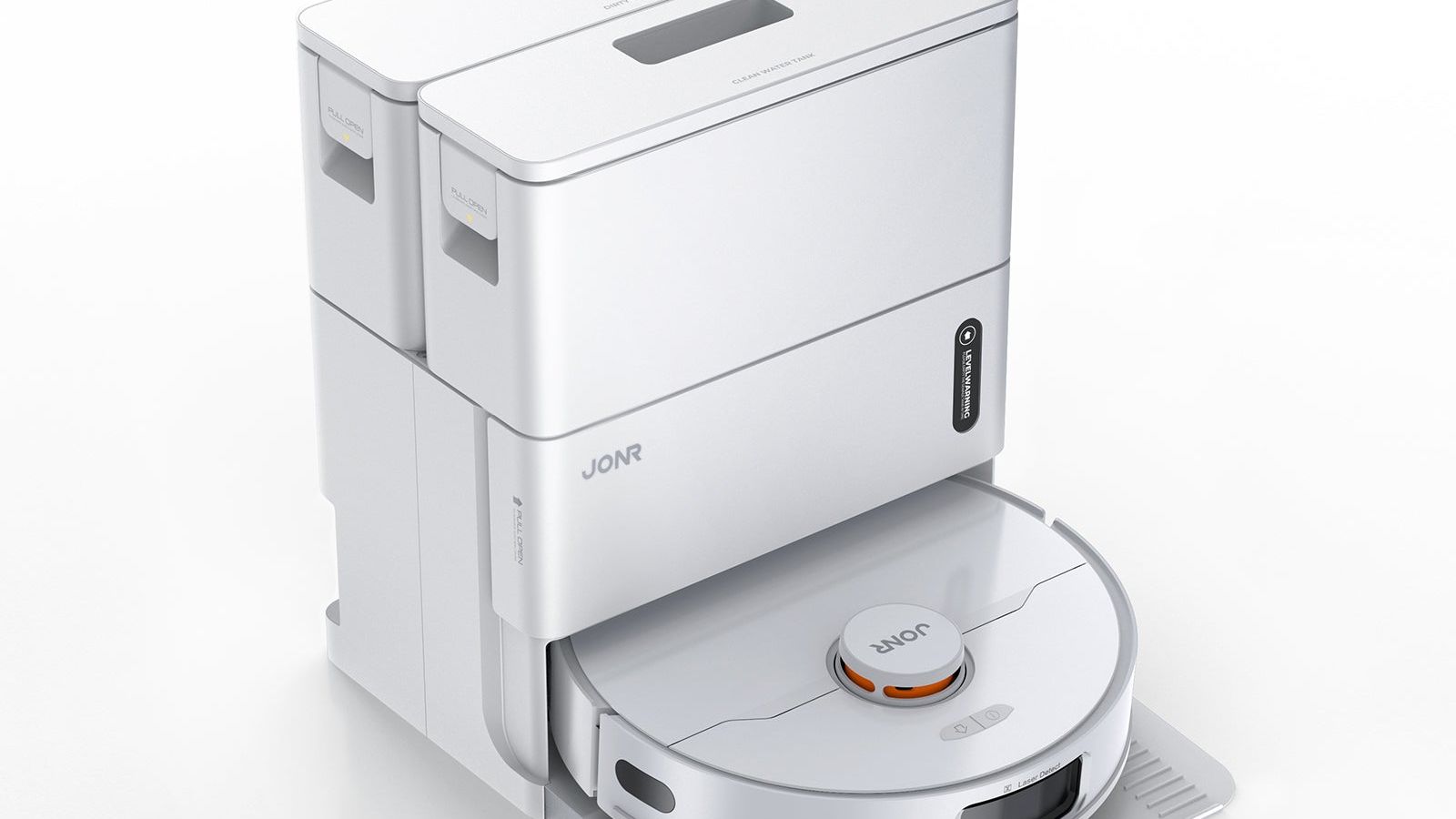
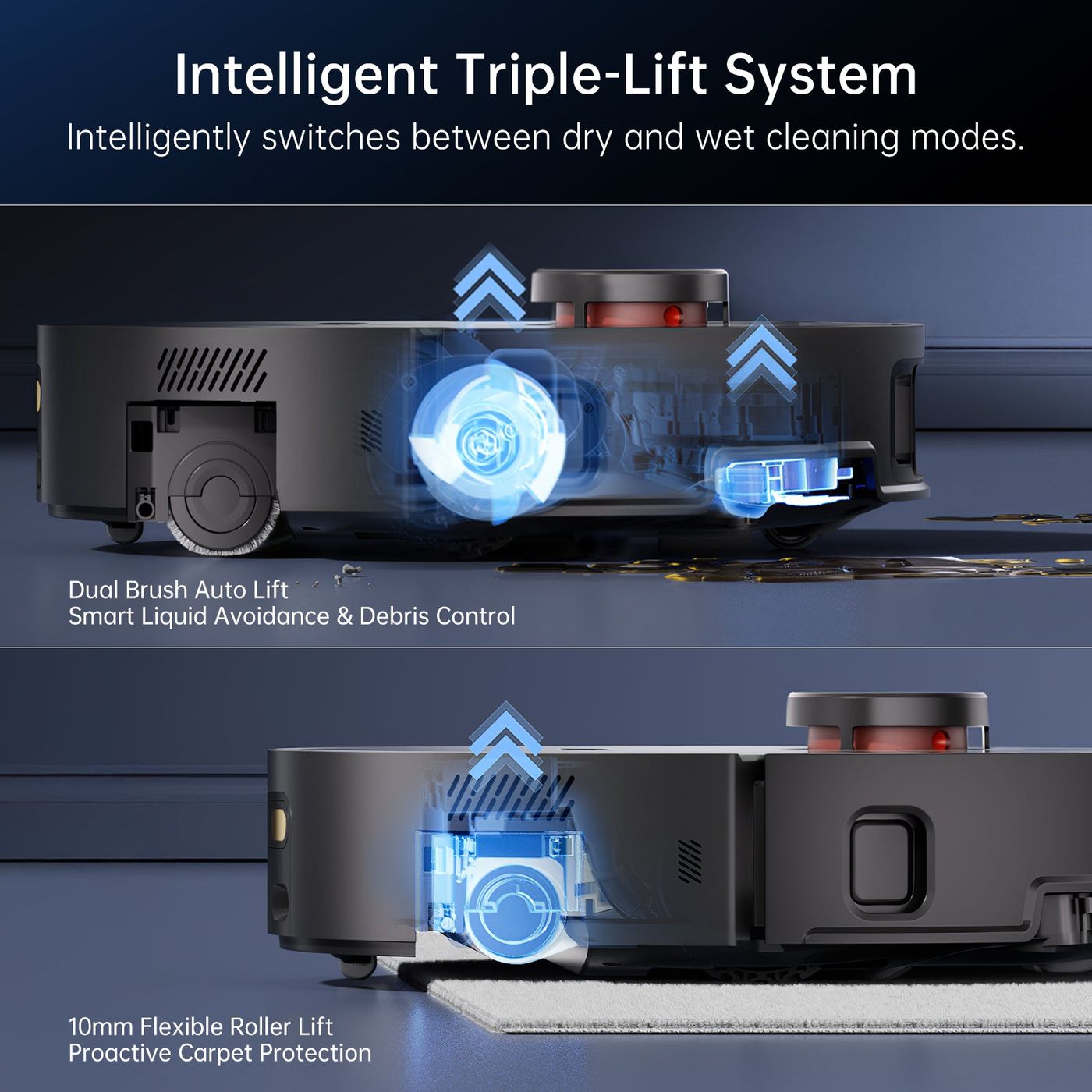
On a ground floor of mixed hard flooring and rugs, the JONR X9 Pro is built for the mix. It runs at 20,000 Pa with LDS navigation, climbs a 20 mm step, and its Triple Auto-Lift system detects carpet and raises the roller by 10 mm so no moisture reaches it. The dock washes the roller and dries it with hot air between runs.
Upstairs, where the job is usually lighter and mostly carpet, the T5 Pro Gen 2 is the more proportionate choice. It offers 15,000 Pa with LiDAR navigation, a 20 mm mop lift, a spiral anti-tangle brush design, and self-emptying into a 2.5 litre bag so a bedroom floor stays on top of itself without daily attention.
Use a handheld for the stairs themselves
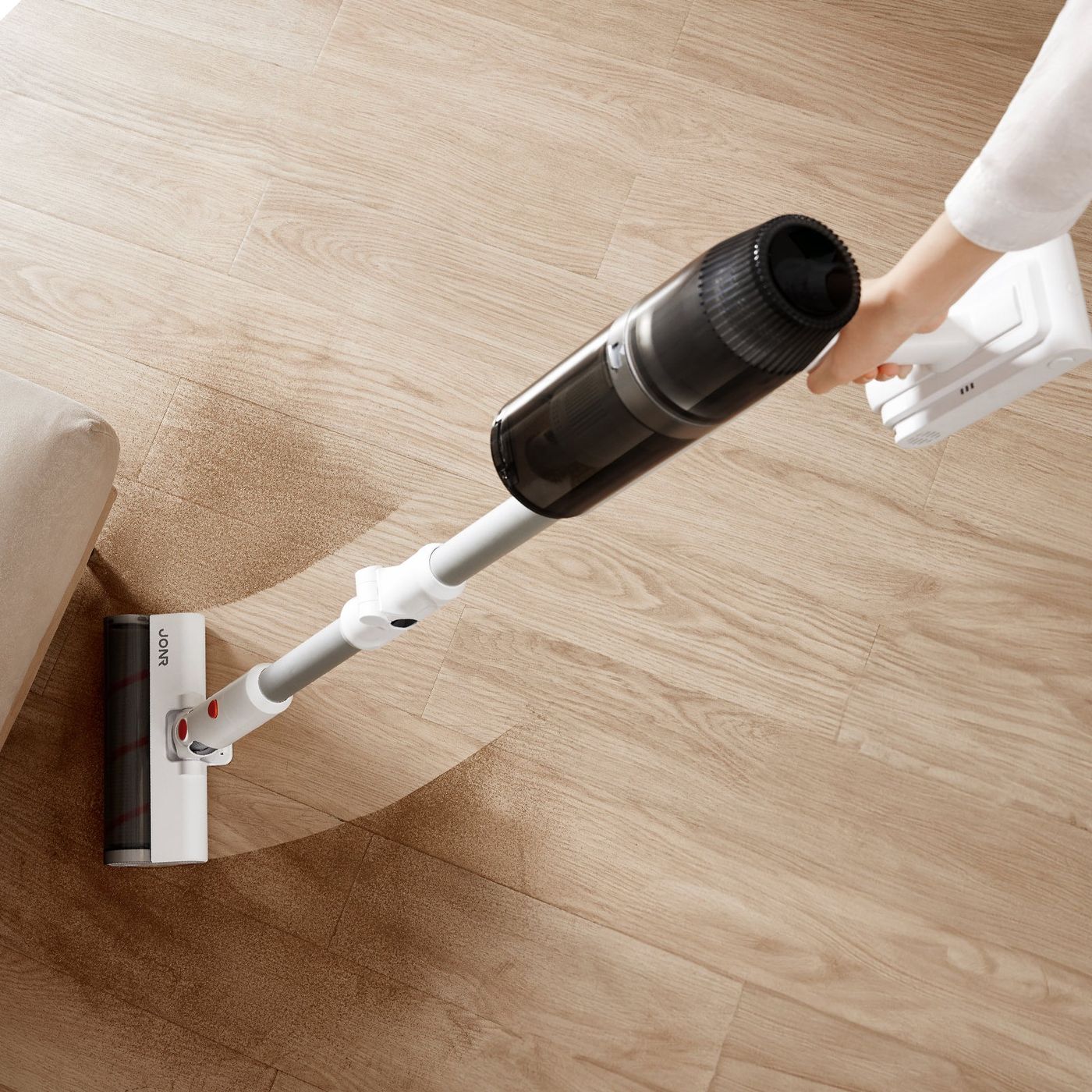
Stairs reward a light machine you can hold in one hand while the other stays on the rail. The JONR VC08 Pro converts from a stick to a handheld in seconds and weighs 2.8 kg, with 13,000 Pa of suction and multi-stage filtration using E12 filters rated to trap 99.5% of fine dust. Runtime is 35 minutes, which is far more than a staircase needs, and the 2.5 litre sealed bag holds up to 70 days of household waste with a 99.7% antibacterial seal.
Two habits make the job quicker. Work from the top step down, so anything you disturb falls onto ground you have yet to clean. Then run the crevice tool along the nosing and the side edges, where the vacuum head cannot sit flat and where hair and grit collect first.
Keep the landings and hallways properly washed
Hard-floor landings and hallways carry the traffic between rooms and show it. A cordless wet and dry cleaner suits them because it lifts and washes in one pass, rather than pushing damp dirt around. The JONR H2 Pro uses PTC precise thermostatic heating for its wash cycle and cleans its own roller afterwards, with 20,000 Pa of suction, a 45 minute runtime and 180 degree lie-flat reach for getting under furniture on a narrow landing. The H2 covers the same ground without the heated wash.
So should you wait?
If your reason for buying is the stairs, waiting will not help much. The first stair-climbing systems are expensive, tied to one brand and unproven over time, and the second generation is likely to be considerably better and cheaper. If your reason for buying is the floors you actually have, there is nothing to wait for. Robot vacuums, wet and dry cleaners and cordless sticks all do their jobs well today.
Buy for the house you live in. Give each floor a machine that stays there, keep a handheld near the stairs, and let the stair-climbing category grow up for a couple of years. It will still be there when it is ready.
A quick checklist for a multi-floor home
- Keep a robot on the floor it cleans instead of carrying it up and down.
- Check the step height a robot can climb before assuming it will reach every room on a floor.
- Look for carpet detection if you have rugs, so the mop or roller lifts rather than dampening them.
- Choose a stair tool by weight and one-handed balance, not by suction figures alone.
- Clean stairs from the top down, and finish the nosing and side edges with a crevice tool.
- Clear wound hair from every roller once a month, on the robot and the handheld alike.