
By late summer a hard floor has had a busy few months. Doors propped open, the garden walked in and out, and more mopping than at any other point in the year. Almost all of that work is done with water straight from the tap, and in much of the country that water arrives carrying a good deal of dissolved mineral.
Hard water does not damage a floor cleaner overnight. It works slowly, leaving a thin deposit in the places nobody looks at: the spray openings, the inside of a tank, the tray the machine sits in. Months later the spray is patchy, floors dry with a faint haze, and it is easy to blame the machine. Here is what is actually going on, and the short routine that prevents it.
What hard water is, and whether you have it
Water hardness is a measure of the calcium and magnesium that rainwater picks up as it passes through rock. The Drinking Water Inspectorate classifies supplies in England and Wales in milligrams per litre of calcium carbonate: up to 100 is soft, 100 to 150 slightly hard, 150 to 200 moderately hard, 200 to 300 hard, and anything above 300 very hard.
Geology decides which one you get. Water that has travelled through the chalk and limestone of southern and eastern England reaches the tap carrying plenty of mineral, which is why London, Kent, Essex, Hertfordshire and much of East Anglia sit at the hard and very hard end of that scale. Water running off the granite of Scotland, Wales, Cumbria and the North West picks up very little and stays soft. A lot of homes fall somewhere in the middle.
Finding your own number
Your water company publishes the hardness for each supply zone, usually searchable by postcode, and the Drinking Water Inspectorate keeps a map covering England and Wales. It takes a minute to check, and it tells you how much of the rest of this guide applies to you.
Where the mineral actually ends up
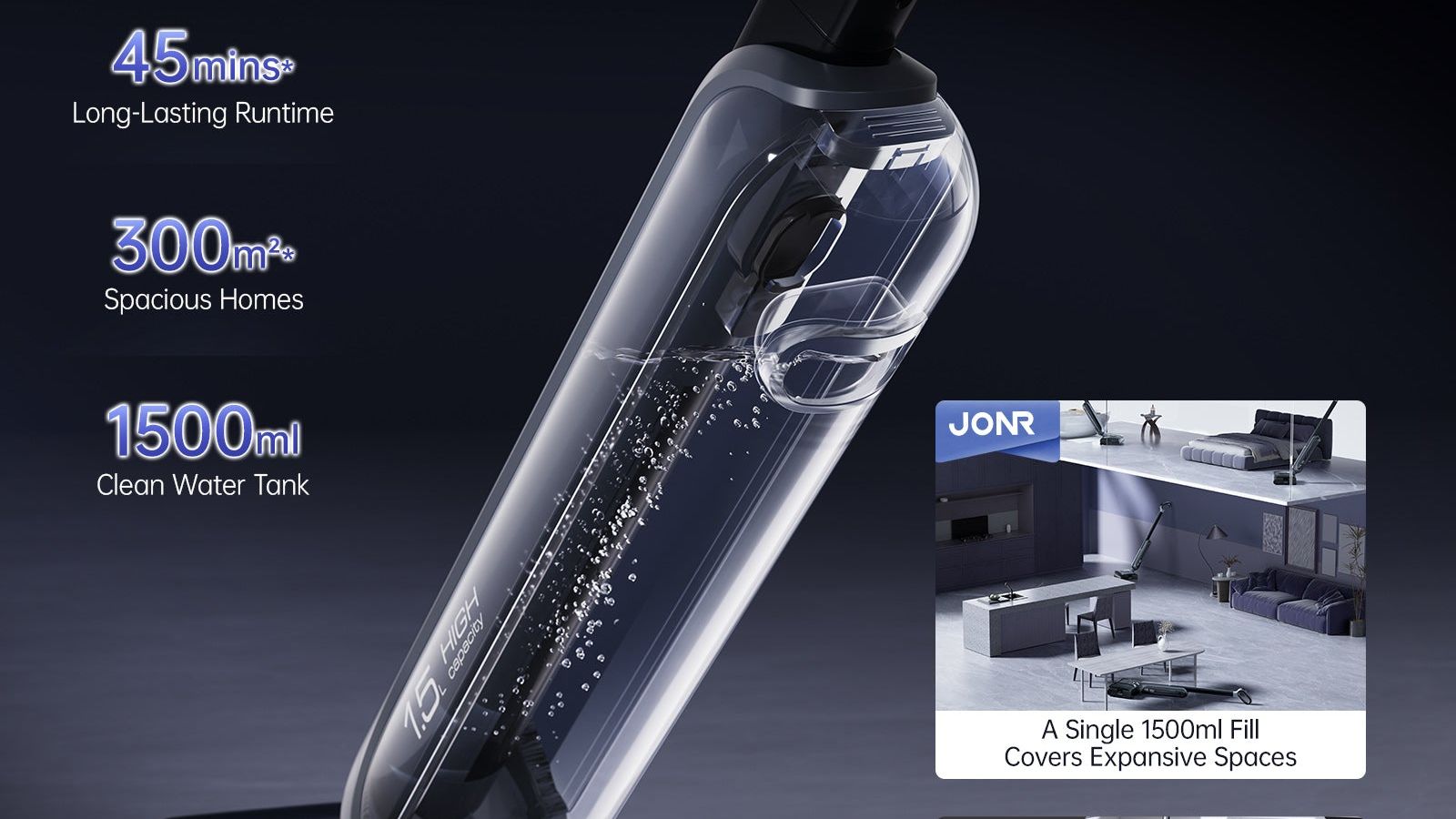
A cordless wet and dry vacuum, or a robot with a mopping station, moves clean water through narrow channels and out through small openings. Those are precisely the places a deposit takes hold.
Spray openings and water lines
Every time water sits in a line and evaporates, it leaves its mineral content behind. Repeat that a few hundred times and the opening is fractionally narrower. An even fan of spray becomes a patchy one, and floors start drying unevenly without any obvious cause.
Rollers and mop pads
Fibres hold water, so they hold mineral too. A roller that has scaled up feels stiffer when dry, stops laying water down evenly, and holds on to grime for longer, because a roughened fibre is harder to rinse clean.
Tanks and trays
The chalky white film around a dirty water tank, or in the tray beneath a dock, is the most visible sign. Treat it as an indicator: whatever has formed where you can see it is also forming where you cannot.
Dry machines sit outside all of this. The JONR VC08 Pro has no water path at all, so limescale never enters the picture. Its upkeep is emptying the 2.5L dust bag and keeping the multi-stage E12 filters clear.
Five signs it has started
- Spray covers less floor than it used to, or reaches one side more than the other.
- A faint white haze on dark tiles or vinyl once the floor has dried.
- The roller feels rough or stiff when dry, rather than soft.
- A chalky ring in the dock tray, or around a tank seal.
- Floors take noticeably longer to dry after a pass than they did when the machine was new.
The routine that prevents most of it
None of this needs a deep clean or a set of specialist products. It is four habits, and three of them take under a minute.
Let the self-clean cycle finish, every time
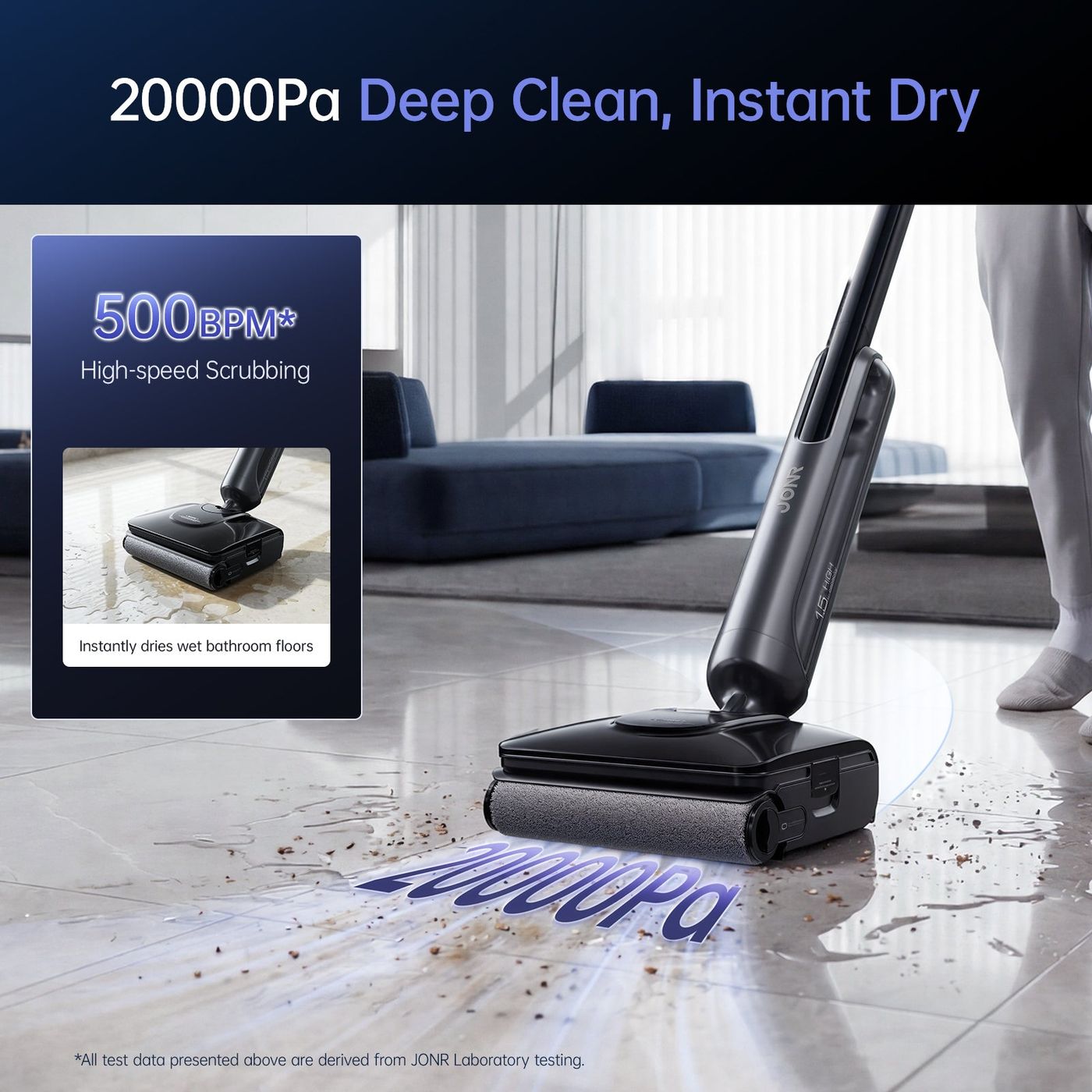
The JONR H2 and H2 Pro wash their own roller in the dock at the end of a session and then dry it with warm air, so it never sits damp. The H2 Pro adds PTC thermostatic heating, bringing heated water into the wash step. Skipping that cycle to save a few minutes is what leaves standing water in the machine overnight, which is exactly when a deposit forms.
Empty and rinse instead of leaving water standing
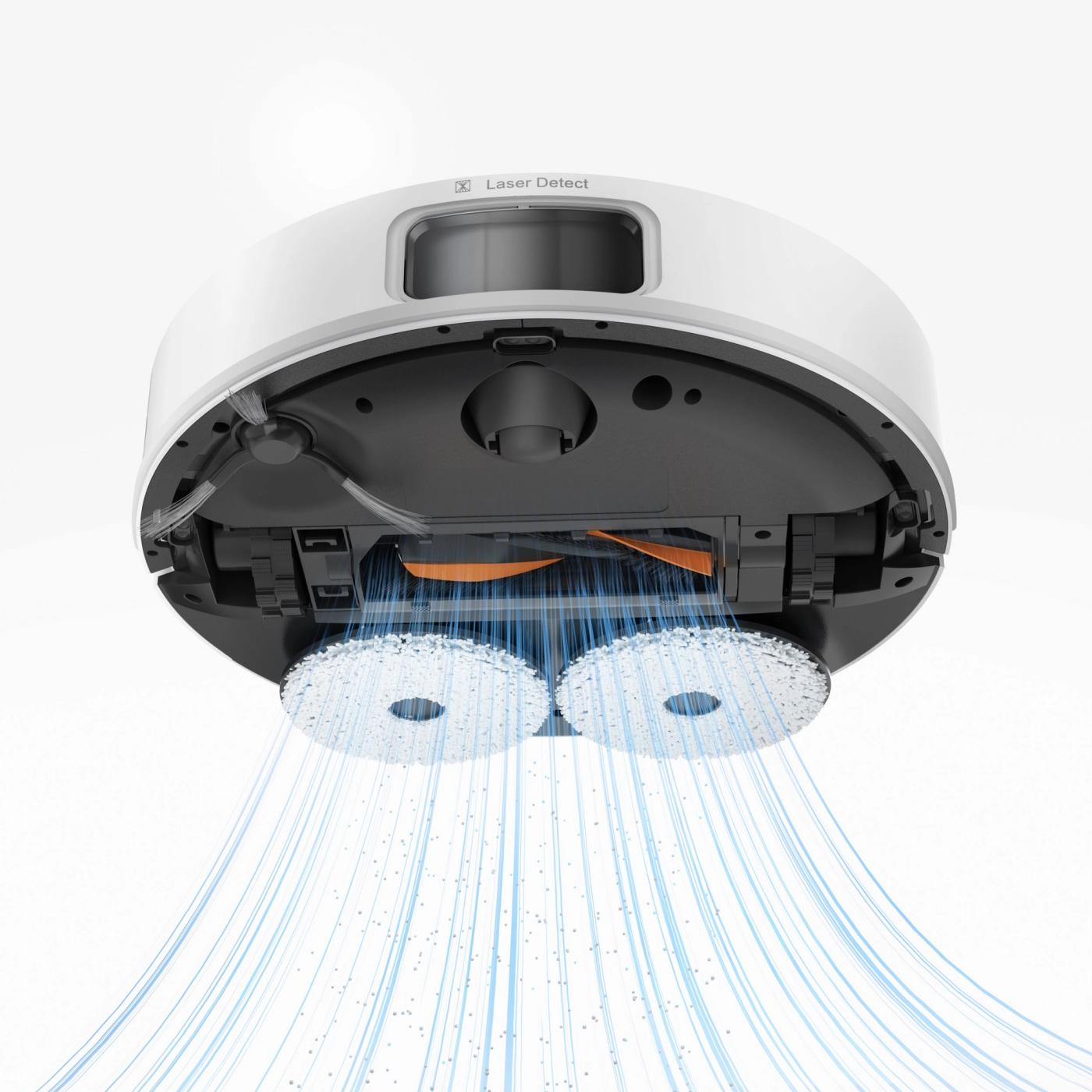
Water left in a tank to evaporate is the single biggest cause of build-up. Tip out both tanks after use, rinse the dirty water tank, and leave the lids off so everything dries properly. Robot mopping stations handle their own version of this on a schedule: the X9 Pro rinses its roller through 16 spray nozzles with fresh water and follows with hot air drying, and the X1 Max washes its mop pads at 75°C and dries them at 45°C.
Soak the removable parts monthly
In a hard water area, once a month take out the tanks, the filter and any removable tray and give them a soak. Follow your manual on what to use. JONR supplies its own floor cleaning solution with the H2 series, and the safe rule with any brand is that vinegar, citric acid and proprietary descalers belong in a sink with the parts you have removed, not poured into the machine's own water path. Acid running through pumps and seals is a good way to void a warranty.
Empty it before you go away
This is the one people forget. If the house is empty for a fortnight in August, a machine left with water in it will be scaled and stale by the time you are back. Empty both tanks, run the self-clean, let the roller dry fully, then leave it on the dock. Five minutes before you leave saves an hour when you return.
Is softened or filtered water worth it?
If you already have a softener plumbed in, the water reaching your tank is doing you a favour and you will see less deposit. Installing one purely for a floor cleaner is not worth it, and filling from a filter jug reduces build-up without stopping it. The routine does more than the water source does.
A five-minute monthly check
- Pull the roller out, look along it, and clear any wound hair while it is off the machine.
- Hold the tanks up to the light and check for a cloudy film on the inside.
- Wipe the dock tray and the charging contacts dry.
- Rinse or replace the filter as your manual specifies.
- Run one full self-clean cycle with the tanks freshly filled.
Hard water is not a problem you fix once. It is a small, steady input, and a small, steady habit cancels it out. Empty the tanks, let the self-clean run through, dry the roller, and soak the removable parts once a month. Do that, and a floor cleaner in Kent will last as well as one in Cumbria.