
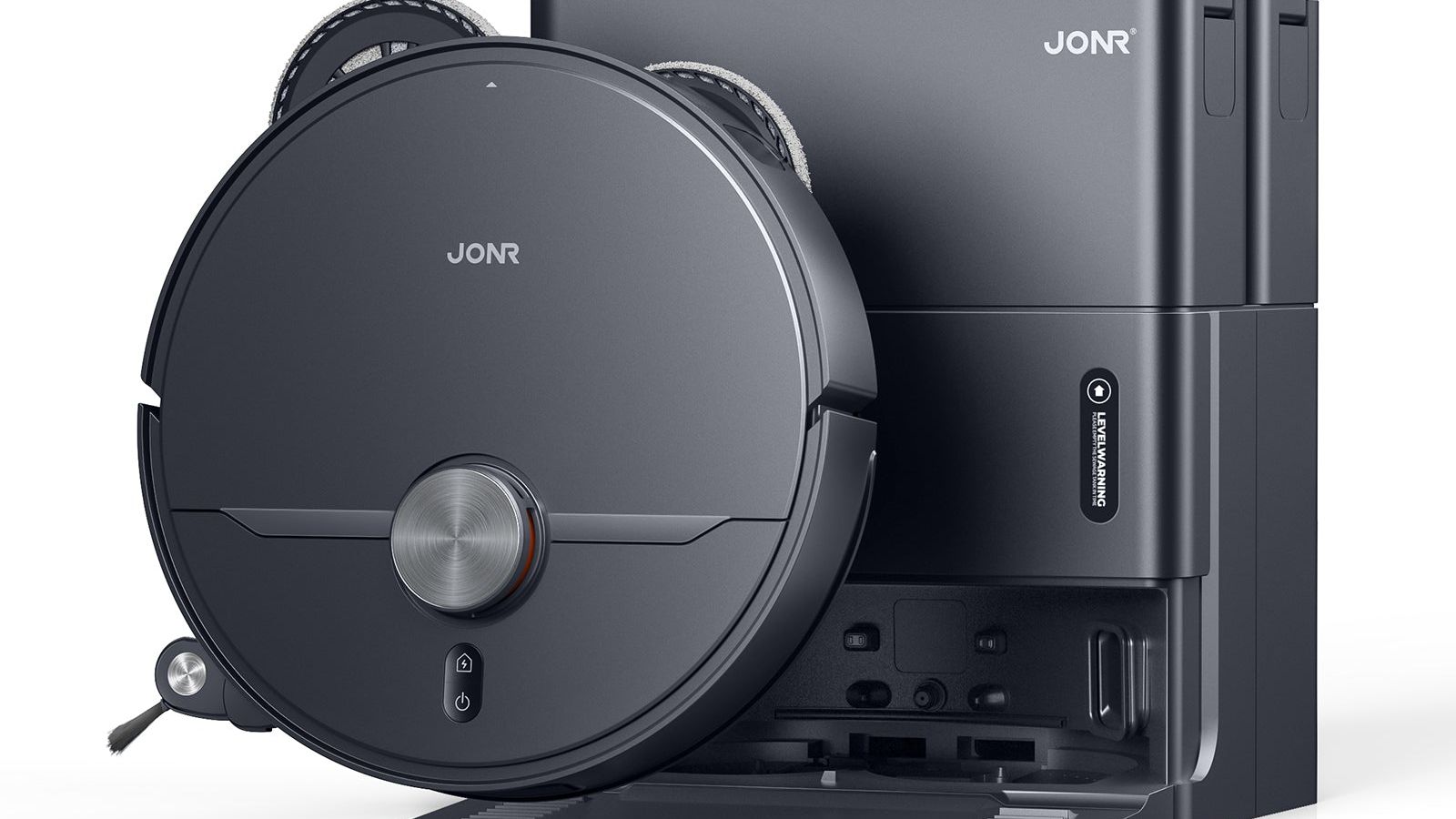
Ofgem sets the energy price cap for 1 October to 31 December, and the figures are published by 26 August. Whatever they land at, autumn is when most British households start paying attention to running costs, because the heating goes on and the bill goes up in the same week.
Cleaning appliances rarely come into that conversation. They are worth a look anyway, because the gap between the cheapest and most expensive way to keep a home clean is wider than people expect, and almost none of it comes down to suction.
It all comes back to one sum
Every running cost figure below comes from the same piece of arithmetic: kilowatt hours used, multiplied by your unit rate. Under the cap for 1 July to 30 September 2026, the average electricity unit rate across England, Scotland and Wales is 26.11p per kWh including VAT, with a standing charge of 57.19p per day. The standing charge is fixed whatever you do, which works out at roughly £209 a year on its own. Only the unit rate responds to how you use things.
Finding the numbers on your own appliances
The rating plate gives watts. Divide by 1,000 for kilowatts, then multiply by hours of use. A 2,000W appliance running for half an hour uses 1 kWh, or 26.11p at the current rate. For anything that charges a battery, read the charger rather than the machine, because the charger sets the draw.
Cordless cleaning is close to free. Heat is what costs.
Charging is pennies
Battery packs in cordless vacuums and floor cleaners hold a small fraction of a kilowatt hour. Take a generous 0.1 kWh for a full charge and you are looking at about 2.6p, so a machine charged every day of the year comes to under £10. A robot vacuum on a daily schedule sits in the same territory. If the goal is a smaller electricity bill, this is not where to look.
Anything with a heating element is a different order of magnitude
Heat is the expensive part of any appliance. Approximate figures for a typical home: a tumble dryer cycle uses somewhere between 2 and 3 kWh, so roughly 50p to 80p a load. A 60°C washing machine cycle is around 1.4 kWh, about 37p. A 200W dehumidifier left running eight hours a day is around 1.6 kWh, roughly 42p a day, which passes £100 across an autumn and winter. Those are the numbers worth attending to, and every one of them is connected to how you clean.
Heated features on cleaning machines: do they add much?
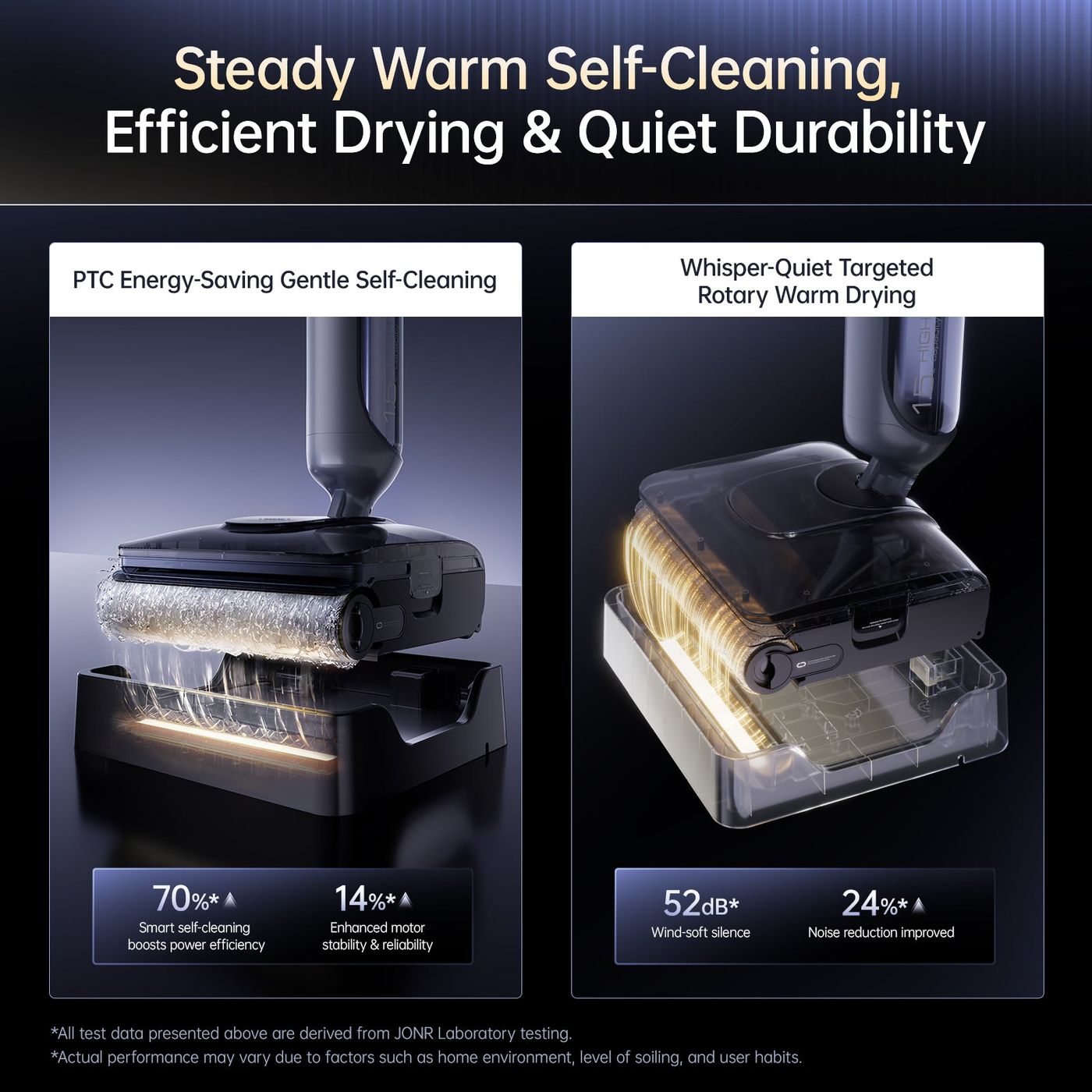
Wet and dry vacuums now arrive with heated water and heated drying, and it is fair to ask what that does to a bill. Heating a small volume of water for a few minutes is nothing like heating a tank or a room, so the answer is: very little. What matters more is how efficiently the element works.
The JONR H2 Pro uses PTC precise thermostatic heating, bringing water to temperature on demand rather than holding a heated reservoir, and JONR quotes a 30% energy saving for that approach. It finishes with a hot air drying cycle on the roller, which is the part that stops the machine sitting damp in a cupboard. The standard H2 leaves out heated water and offers a one-tap dry instead, at a lower price. Both clean at 20,000 Pa, run for 45 minutes and cover around 300 m² per charge.
On running cost, the choice between them barely registers. It matters for what you are cleaning. Heated water earns its keep on greasy kitchen floors and in homes with pets, and matters less in a flat with two hard-floored rooms.
The bigger saving is in what happens after you clean
An overlooked cost of cleaning is the drying that follows it. A traditional mop leaves water on the floor to evaporate into the room. In an airtight modern flat that pushes humidity up, which is what makes a dehumidifier run for longer, and a dehumidifier is one of the more expensive things in the house to leave on.
A wet and dry vacuum washes the floor and lifts the water back up in the same pass, so floors are damp rather than wet and dry within minutes. The same logic applies to laundry. An indoor airer puts several litres of water into the air over a day, and that moisture has to go somewhere. When the weather rules out drying outdoors, a full dryer load is usually cheaper than an airer plus a dehumidifier running to compensate.
Robot vacuums and what the station is doing
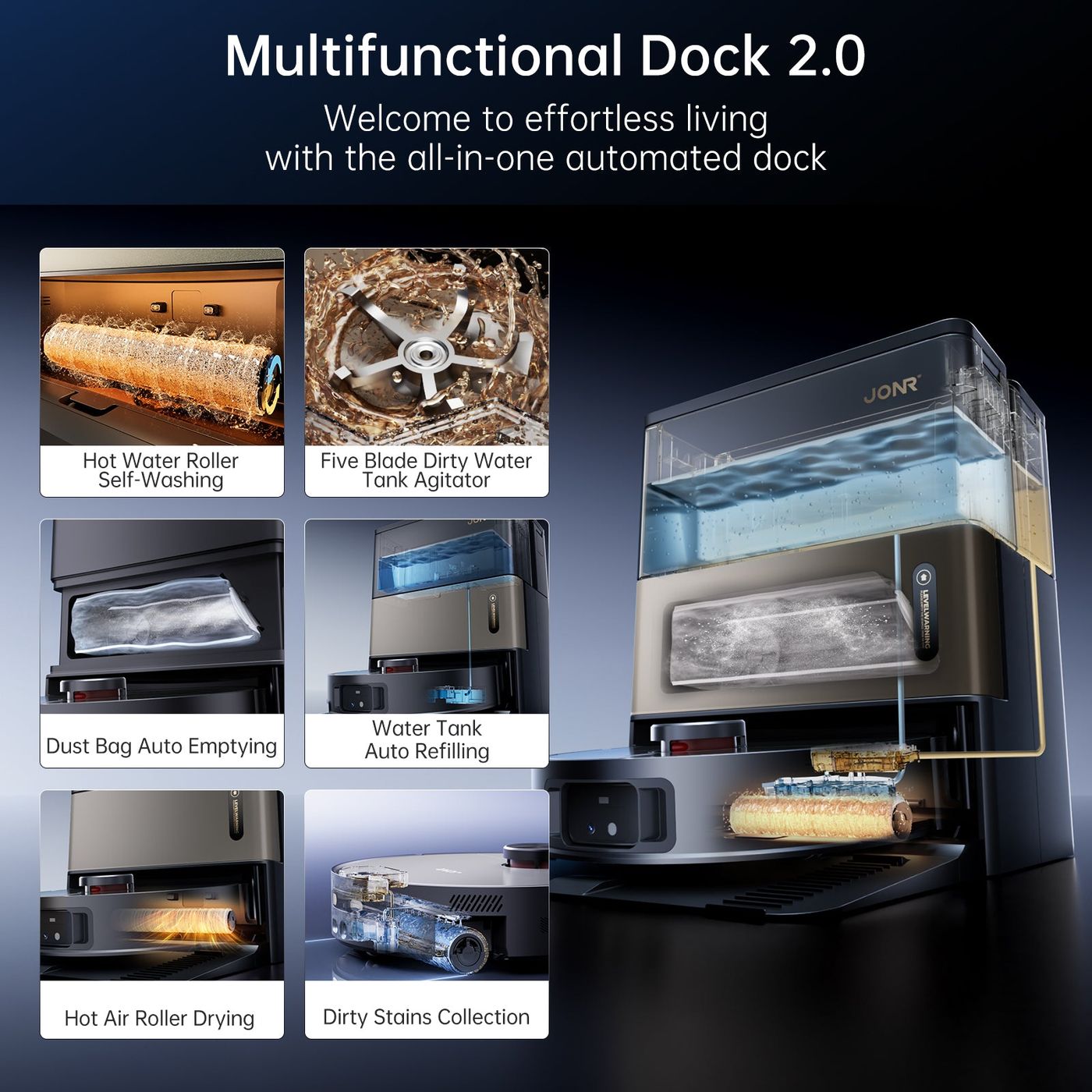
A robot running a daily pass uses a trivial amount of electricity. The station is where the interesting figures sit. Auto-emptying runs a strong motor for a few seconds, so even done often it adds up to very little. Heated mop washing and drying cycles run considerably longer.
The JONR X1 Max washes its mop pads at 75°C and dries them with 45°C warm air, then empties into a 2.5L bag rated for 60 or more days of hands-free operation. The X9 Pro washes its roller through 16 spray nozzles and finishes with hot air drying, and its Triple Auto-Lift system raises the roller by 10 mm over carpet so rugs are cleaned dry rather than dampened, which is one less thing drying out in the room.
If you want to keep station cycles down, the lever is settings rather than hardware. Run the mop wash after mopping sessions rather than after every dry pass, and use the shorter drying cycle in mild weather, saving the longer one for winter when rooms take much longer to air out.
Maintenance is the cheapest efficiency gain there is
A blocked filter or a hair-wrapped roller makes a motor work harder for less pick-up, costing you runtime and results at once. Ten minutes a month covers the lot.
- Rinse washable filters and let them dry fully before refitting. A damp filter restricts airflow more than a dusty one.
- Clear hair from brush rollers. Anti-tangle designs reduce the job rather than remove it.
- Empty bins and dust bags on schedule rather than waiting until they are full.
- Wipe robot sensors and charging contacts so the machine docks first time instead of hunting for the station.
- Rinse the dirty water tank on a wet and dry vacuum after every use.
A short list for the run-up to 1 October
- Note your current unit rate and standing charge now, so you can compare properly when the new cap figures land.
- Work out the kilowatt hours of anything in the house that heats. That is where your bill is decided.
- Switch floor cleaning to short, frequent passes rather than one long weekly session.
- Keep hard floors damp rather than wet, so rooms dry without help from a dehumidifier.
- Service filters and rollers on every cleaning machine before the heating goes on.
Cleaning appliances are not where a household energy bill is won or lost. Heating, hot water and drying are. But how you clean feeds straight into how much drying and dehumidifying a home needs through a British autumn, and that link is worth more than any figure on a spec sheet.